
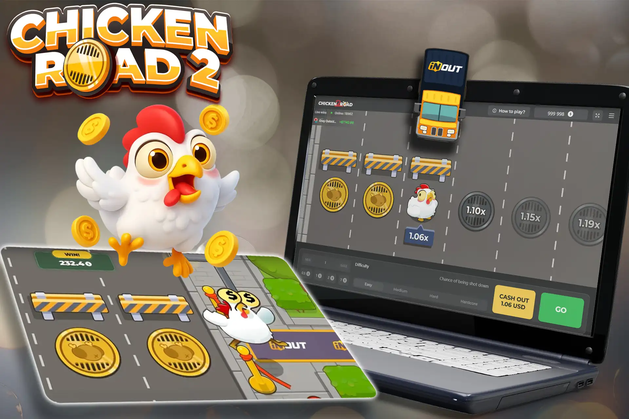





Chicken Road 2 Casino Game In Canada
Available in Canada, Chicken Road 2 helps adult players learn the tap-by-tap rhythm, bankroll rules, and calmer sessions in 2026.
Where Chicken Road 2 Game Casino Fits In Canada
Chicken Road 2 is built around quick decisions and simple rules, which is exactly why it can feel tricky on day one. Picture this: you open the lobby on your phone, you see bright graphics, and you want to jump in before your coffee cools. If you start without a plan, you end up tapping faster than you think, then wondering why the session felt noisy instead of fun.
In Canada, availability depends on where you play and what is permitted where you are. The practical mindset is "check first, play second." Confirm you are of legal age, use a platform that applies local rules, and keep sessions inside a budget you can live with.
Treat each session like a short routine, not a marathon. Decide how long you want to play, decide what you are willing to spend, then stick to it even if the round feels "almost there." A clean exit is part of the entertainment.
What Adult Players Usually Miss In The First Ten Minutes
Most people miss pacing and context. Imagine you play while commuting, notifications popping up, one hand on the phone, and your attention split in half. That is when small mistakes happen - mis-taps, rushed choices, and "one more try" loops that stretch past your original plan.
The other miss is assuming every session feels the same. A calm afternoon plays differently than a late-night session when you are tired. If you want smoother results, choose a consistent window and keep distractions low.
Top casinos for playing Chicken Road 2 — current list
ALF Casino
Mafia Casino
SG Casino
Retro Bet
LeoVegas
The Core Loop: Risk, Timing, And Simple Choices
The appeal of Chicken Road 2 is that it feels obvious: make a move, avoid the bad step, keep going. But "obvious" does not mean "easy." Imagine you are two rounds in, you get a small win, and suddenly you feel like you have the rhythm. That confidence can make you speed up, and speed is where discipline slips.
Think in tempo, not streaks. You are not trying to prove anything to the screen. You are trying to keep decisions clean: "I stop because I hit my time limit," or "I stop because I reached my session budget." When you cannot explain the next tap, you are usually chasing.
Fast games amplify emotion. If you had a stressful day, you might tap to distract yourself, then realize you are playing on autopilot. The fix is structure: short sessions, a hard stop, and a pause before you restart.
Reading The Pattern Without Overthinking It
A common mistake is to stare at the screen as if it is giving you a secret signal. Picture a player who says, "It felt like it was due." That feeling is normal, but it is not a plan. A better approach is to treat each round as independent and focus on your own behavior: speed, stake size, and stop rules.
If you want something "strategy-like," build it around repetition you control. Keep your stake consistent for a set number of rounds, then stop and review whether you followed your limit.
Session Pacing: How To Stay Calm When It Gets Fast
Imagine you are winning small amounts and you want to press your luck. That is the moment to slow down, not speed up. Take a breath and make the next decision deliberately; one deliberate decision can reset the whole session.
Add micro-pauses. After a win, pause for ten seconds. After a loss, pause for ten seconds. Those seconds break the automatic tap loop and help you avoid mis-taps on mobile.
Practice Runs Versus Real Sessions
Imagine you try the title while waiting for someone, distracted, and you decide it is "too chaotic." That conclusion may be about your context, not the mechanics. Practice runs should teach you controls and speed; real sessions are about discipline: budget, time, and exit rules. Keeping the two separate reduces frustration.
Getting Started: Account Steps, Verification, And Basic Safety
Where you access Chicken Road 2 may involve an account, a cashier, and standard checks designed to protect users. Imagine you sign up quickly, skip profile details, and jump straight into play. Later, when you try to cash out or change a payment route, you get asked to confirm information you barely remember entering. That is not a mystery - it is a workflow.
Start with clean details. Use an email and phone you control, and keep personal information consistent. If verification is requested, treat it like a one-time task: clear photos, readable documents, no last-minute edits.
Basic safety is mostly boring, which is why it works. Use a unique password, avoid shared devices for cashier actions, and log out when you are done. Picture yourself using a friend’s tablet "just once." One saved login can create confusion later.
Set your personal controls early. Deposit limits, session limits, and timeout tools work best when you activate them before your first real session, when you are calm.
Money Flow On Fast Games: Deposits, Cashouts, And Good Habits
Fast-play titles make money decisions feel smaller than they are. Imagine you top up quickly because "it’s just a few more rounds," then you realize you did that three times in one evening. The fix is to treat your cashier like a checklist, not a shortcut.
Decide your session budget before you deposit, then deposit once. Repeated top-ups are where people lose track. Cashouts also run smoother when your profile is complete and your payment route stays consistent. If you constantly switch methods, you often trigger extra confirmations.
Below is a practical table to keep the cashier side clean. It avoids promises and focuses on actions you can control.
Task In The Cashier | What You Check First | What Can Slow You Down | The Cleaner Habit |
First deposit | Budget and session time | Rushed confirmations, distractions | Deposit once per planned session |
Choosing a payment route | Name and details match your profile | Switching methods too often | Keep one main route for a while |
Requesting a cashout | Profile completeness and history | Missing confirmations, unclear documents | Finish checks before requesting |
Changing account details | One change at a time | Multiple edits in one day | Update, confirm, then pause |
Tracking progress | Status in your transaction log | Repeating requests, guesswork | Check history, not feelings |
Depositing Without Turning It Into A Reflex
Imagine you are on a good run and you think, "I’ll add a little more." That is a reflex, not a plan. Close the game, look at your session spend, and decide whether you are starting a new session or ending the night.
A simple rule helps: never deposit mid-round. Finish the round, step away, then decide. This keeps spending tied to your budget instead of your mood.
Cashing Out With Fewer Headaches
Imagine you request a cashout, then realize your profile is incomplete, or you changed your details yesterday. Those triggers can add checks, and checks add time. The cleanest approach is to separate tasks: profile updates first, play second, cashier requests last.
If something feels stuck, avoid re-sending the request. Check your transaction history, note the status, then act from facts, not impatience.
Playing On Mobile In Canada: Comfort, Focus, And Battery Reality
Mobile play is convenient, but it rewards preparation. Picture this: your phone is on low battery, notifications keep landing, and you want a quick session. You can still play, but you are more likely to rush and make choices you do not like later.
Set up a "clean mobile" routine. Turn on a quiet mode, plug in if you can, and keep your session short. If you are switching between Wi-Fi and cellular, do cashier actions only when your connection is stable.
Small Tweaks That Make Mobile Sessions Feel Better
Imagine your grip shifts and your taps get sloppy. Rest your phone on a surface or use two hands for steadier input. It sounds tiny, but it changes accuracy and mood.
Pick one calmer time of day for play if you can. Consistency is the hidden skill behind any fast title - the goal is steady decisions, not constant adrenaline.

Support, Controls, And Knowing When To Stop
Support is useful when you show up with a clear description. Imagine you message, "It didn’t work," with no details. You will get questions back and lose time. If you instead say what you did in order, on which device, and what you saw, you usually get a concrete next step.
Controls matter even more. Timeouts, self-exclusion options, and limit tools help adult players keep play in balance. Picture a late-night session you opened out of habit, not enjoyment. That is the perfect moment to use a pause tool and come back later with a clearer head.
Stopping is a skill. A clean stop might be your planned time, your planned budget, or the moment you notice you are chasing. If the urge is "recover fast," step away.
Writing A Support Message That Gets An Answer
Imagine you have two minutes and you want a helpful reply. Use a simple structure: "I did A, then B, then C happened." Add the approximate time and whether you were on mobile or desktop, then wait.
While you wait, avoid changing settings or repeating requests. Check your history log, keep notes, and let the process run.
FAQ
How can I tell if this title is a good fit for my play style?
Start by watching your own behavior in short sessions: do you rush taps, chase losses, or lose track of time? Imagine a ten-minute test where you set a tiny budget and a hard stop, then see how you feel when you stop on schedule. If you enjoy quick decisions without feeling pulled into "just one more," it’s likely a good fit. If you feel tense or impulsive, choose slower formats or stricter limits.
What is the easiest way to set a budget before I start?
Pick a number you can truly afford to lose, then treat it like a ticket you spend once. Imagine you are about to top up again mid-session - pause, check your spend, and decide whether you are starting a new session or ending. "One deposit per planned session" is a simple rule that stops drip-feed spending.
Why do cashouts sometimes take longer than players expect?
Because different steps can be triggered by your account history, profile completeness, and payment consistency. Imagine you changed your email yesterday and request a payout today - extra confirmation can appear, and that adds time. Keep details stable, complete requested checks early, and follow status through your transaction history instead of refreshing repeatedly.
How do I keep mobile play from becoming a mindless loop?
Create friction on purpose. Imagine you force a ten-second pause after every win and every loss - that tiny break interrupts autopilot and makes each decision deliberate. Turn on quiet mode, keep your phone steady, and set a session timer you respect. When the timer ends, you stop, even if it feels like you were "close."
What should I do if I think I made a mistake in the cashier?
Stop clicking and verify what already happened. Imagine you are unsure whether a request was submitted - repeating it can create confusion. Check your transaction log, note the time and status, and only then decide your next step. If you need help, describe the sequence and device context so support can answer without guessing.
When is it smarter to use a timeout instead of pushing through?
When your mood shifts from enjoyment to recovery. Imagine you catch yourself increasing stakes to "get back" what you lost - that’s a signal to pause, not a signal to continue. A timeout creates distance, and distance restores decision quality. You can come back later with a clearer plan.
How can I explain a problem clearly to support without a long chat?
Use one short message with the order of events. Imagine you write: "On mobile, I attempted a cashout, then I saw a pending status, then the screen refreshed." Add the approximate time and what changed recently (like device or profile updates). Clear structure helps support reply with one specific step.